CMV Brief: Michigan Clerk Targeted for Cleaning Voter Rolls — When Doing the Job Becomes the Problem

A Michigan county clerk is now under scrutiny for doing what many would argue is the most basic responsibility in election administration: maintaining accurate voter rolls.
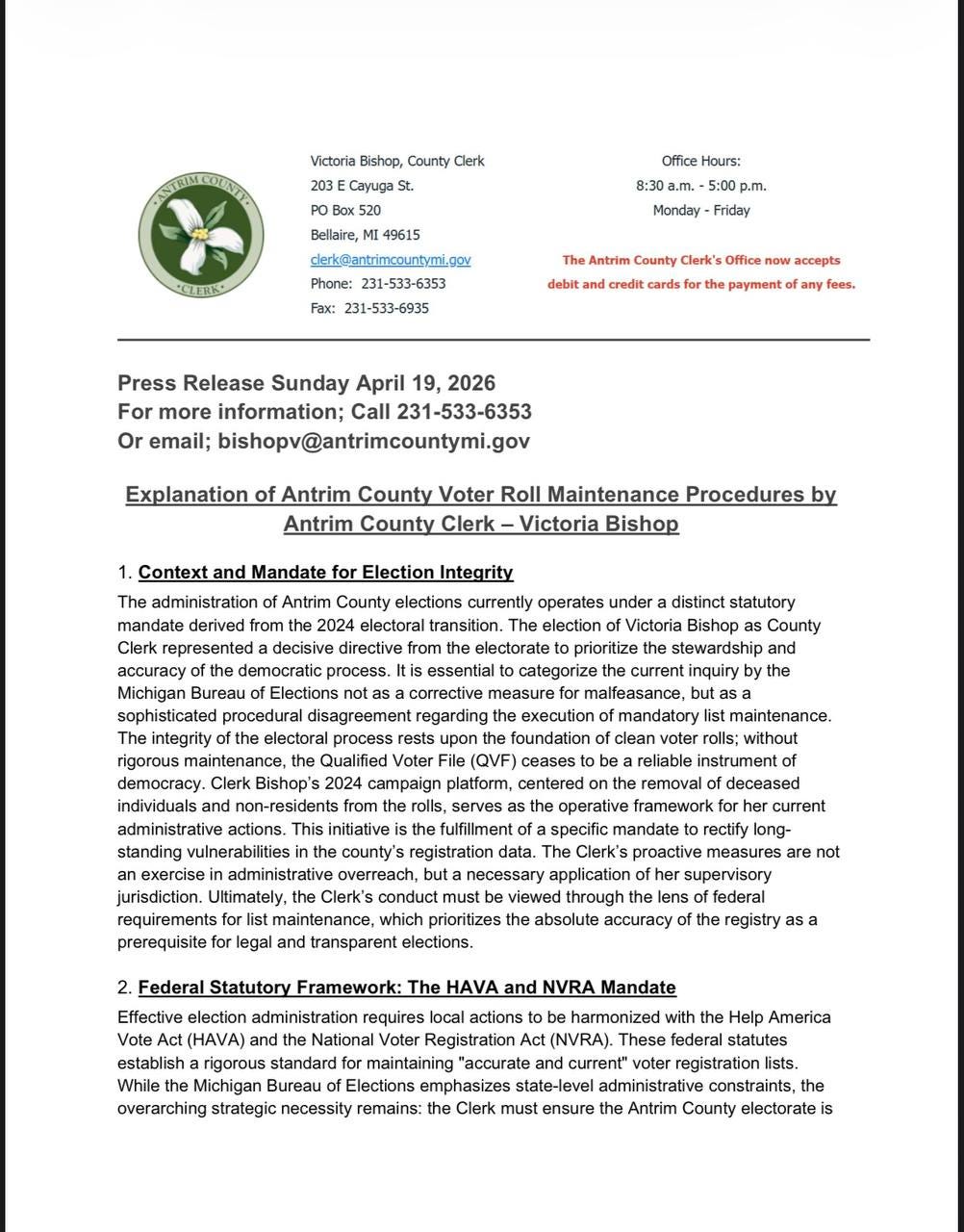
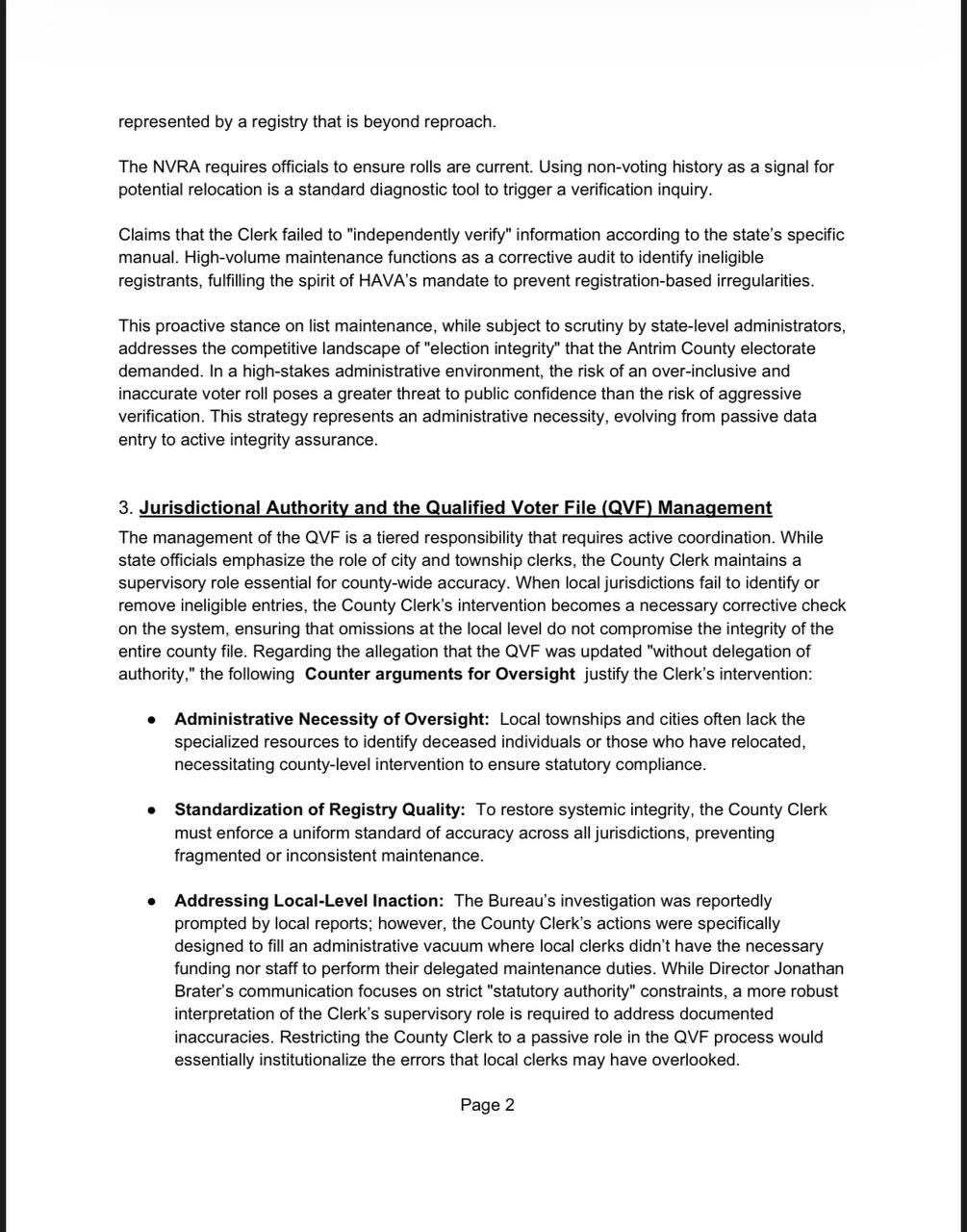
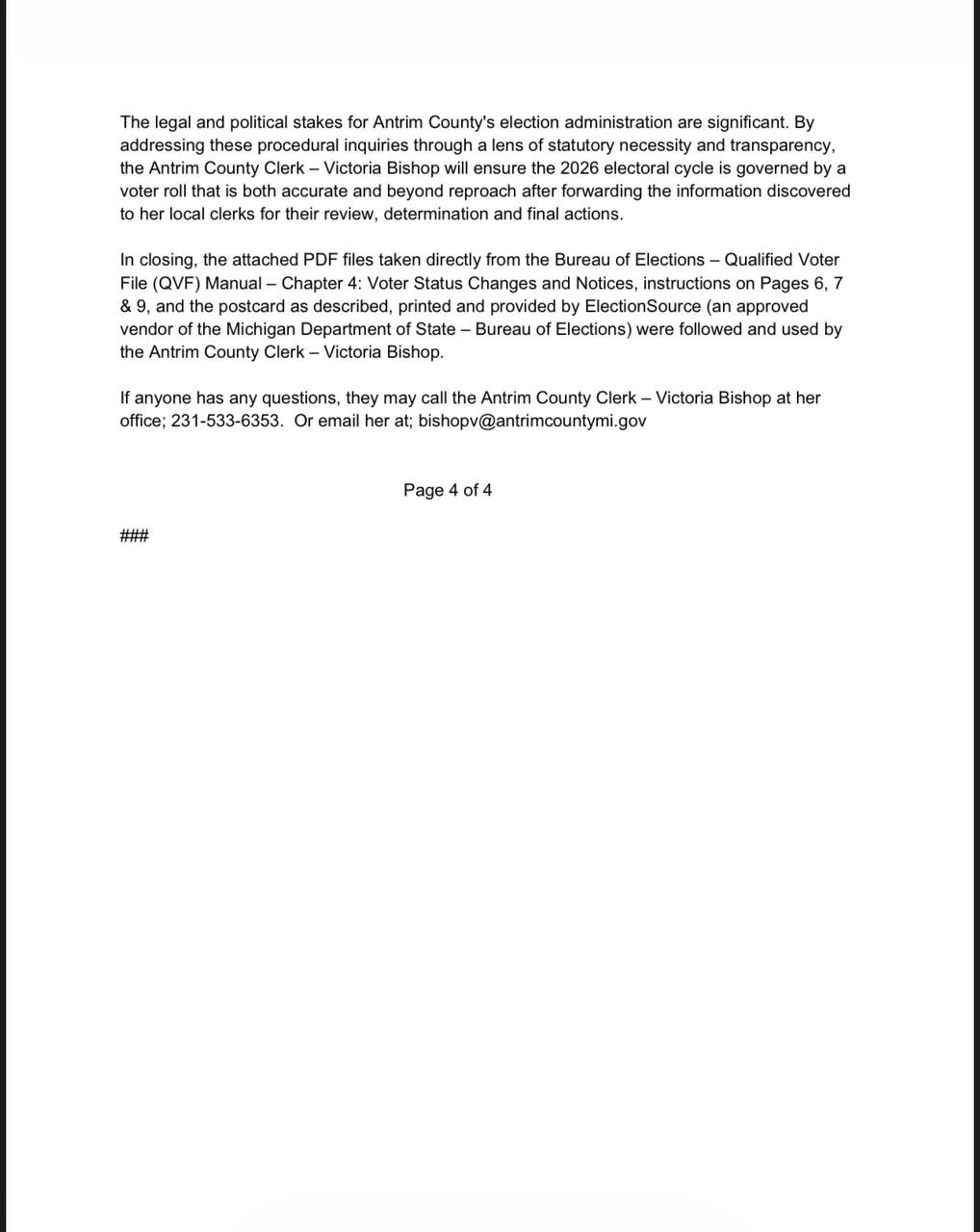
Antrim County Clerk Victoria Bishop is facing pressure from the Michigan Bureau of Elections after conducting what she has described as a “corrective audit” of the county’s voter file. But according to firsthand accounts and her own statement, this was not rogue action. It was a deliberate, data-driven effort to remove ineligible registrations and restore integrity to the system.
And critically, her findings did not stand alone.
They aligned with CheckMyVote data.
What Actually Happened
According to conversations with her husband Randy Bishop and her official statement, the process was straightforward, methodical, and grounded in both law and data:
Bishop identified deceased individuals still listed on voter rolls
As county clerk, she acted on what she views as a clear duty to remove deceased voters
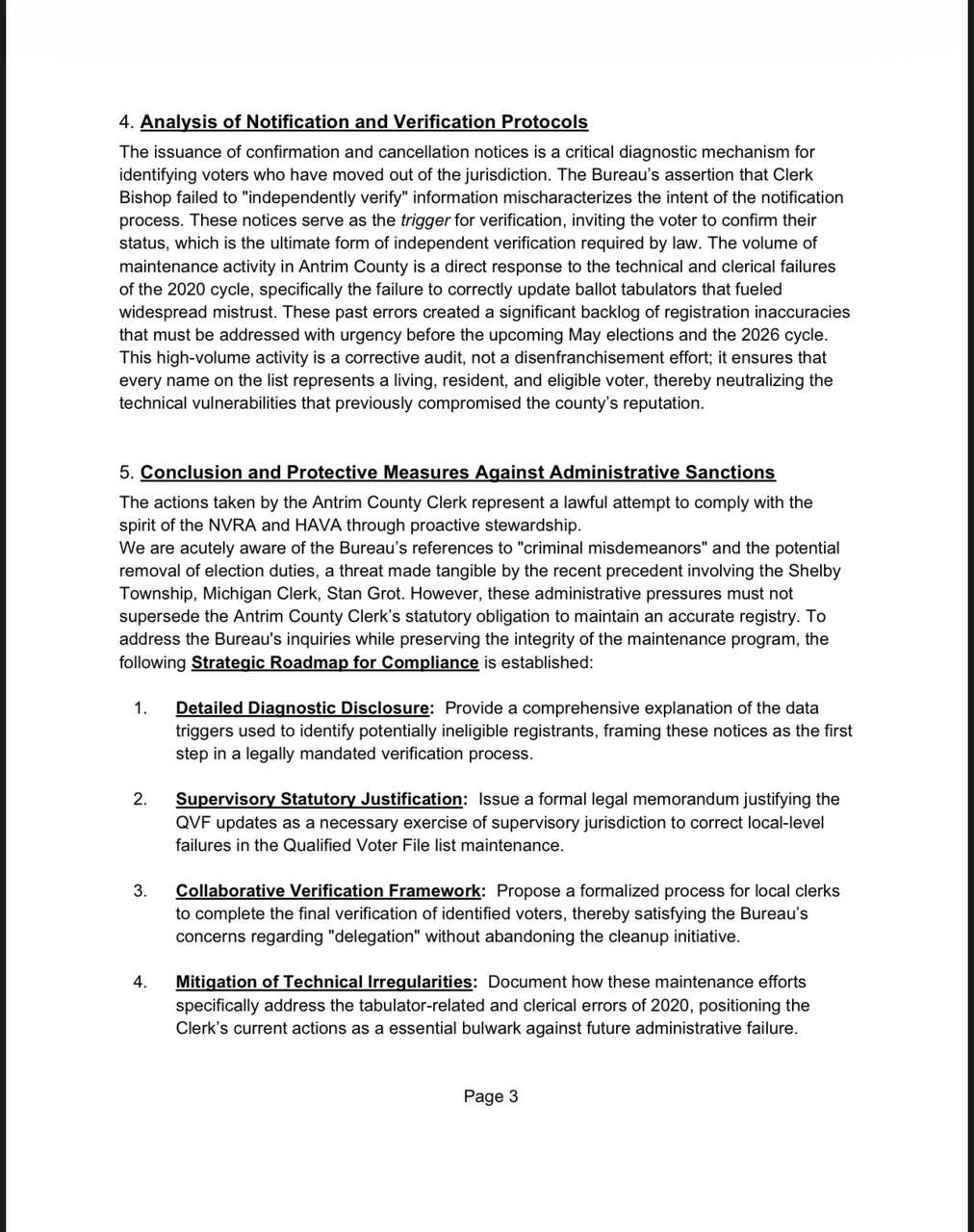
For inactive voters, she did not remove them outright, but instead:
Provided guidance to local township clerks
Initiated verification through legally recognized notice processes
This distinction matters.
This was not mass removal.
This was verification and compliance.
The CMV Factor: Data Alignment Changes Everything
Here is where this story becomes significantly more important.
Bishop did not act blindly or politically. She:
Conducted independent analysis of the voter file
Then cross-checked her findings using CheckMyVote tools
Found that the results aligned
That alignment is the story.
👉 Independent clerk analysis
👉 Independent CMV analysis
👉 Same conclusions
Data doesn’t lie.
This reinforces what CMV has consistently demonstrated across multiple states: voter roll issues are not theoretical, they are observable in the data.
As outlined in CMV’s broader work analyzing public voter files, the platform routinely flags issues such as deceased registrations, outdated addresses, and duplicate records using cross-referenced public datasets and volunteer validation.
The Real Conflict: Authority vs Accountability
State officials have framed this as a potential overreach of authority.
But that framing ignores the underlying issue:
➡️ What happens when lower-level maintenance fails?
➡️ Who is responsible for fixing it?
Bishop’s position is clear:
When local systems fail to maintain accuracy, county-level intervention becomes necessary.
Her argument is rooted in both federal and practical standards:
The National Voter Registration Act (NVRA) requires voter rolls to be accurate and current
The Help America Vote Act (HAVA) reinforces the need for integrity in voter databases
Non-voting history is widely used as a trigger for verification, not removal
This was not overreach. It was execution of duty.
The Bigger Problem: A System That Isn’t Consistent
This situation exposes a structural issue CMV has repeatedly identified:
Michigan’s voter roll maintenance is not uniform.
Over 1,500 local jurisdictions
Different levels of:
Resources
Training
Enforcement
The result:
➡️ Some areas actively clean voter rolls
➡️ Others lag behind
➡️ No consistent statewide standard
This creates a fragmented system where accuracy depends on who is paying attention.
“While the state officials emphasize the role of city and township clerks, the County Clerk maintains a supervisory role essential for county-wide accuracy.”
-Antrim County Clerk Victoria Bishop
Why This Case Matters Right Now
This is not just about Antrim County.
This is what happens when:
A clerk actually acts on data
Uses modern tools like CMV
Applies federal intent over passive administration
And instead of being supported, that effort is challenged.
At the same time, CMV data continues to show:
Large numbers of inactive registrations
Ongoing presence of outdated and ineligible records
Uneven cleanup across counties
These are not accusations.
They are data trends.
The Bottom Line
Let’s call this what it is:
A clerk identifies deceased voters
Uses lawful verification processes
Confirms findings with independent data tools
Achieves data alignment
And is then investigated.
That raises a serious question:
Is the system designed to prioritize accuracy — or avoid disruption?
Because when independent analysis and official responsibility point to the same conclusion, the issue is no longer about method.
It’s about whether the system is willing to confront what the data shows.
Call to Action
✔️ Check who is registered at your address
✔️ Review voter history tied to your address
✔️ Subscribe to receive alerts when changes occur
Support the Work
CMV Briefs are free.
But the research, data processing, and tools that make this level of transparency possible are not.
If you want more investigations like this, across Michigan and across the country, support the work.